
.png)
Choosing a review platform is different when returns are part of the buying journey.
In high-return categories, reviews need to do more than build product-page trust. They need to help shoppers make better decisions before they buy, surface issues that could lead to returns, and give support teams a way to act when feedback points to a refund, exchange or delivery problem.
They also need to protect your brand reputation. Unhappy customers do not have to wait for a review request. They can leave company reviews on public profiles, where future shoppers - and AI search tools - judge how trustworthy your brand is.
So instead of comparing platforms by feature lists alone, we’ve ranked Yotpo, Trustpilot, REVIEWS.io, Okendo and Stamped.io against the questions that matter most for return-heavy brands.
All five platforms are Google licensed review partners, so eligible reviews can contribute to Google Store Ratings. Since they all cover that baseline, this comparison focuses on what sets them apart.
Rank #1: Trustpilot
The top choice if AI visibility is a priority. It’s reportedly the 5th most cited domain by ChatGPT, so a well managed Trustpilot profile gives you a genuine advantage. It’s also an open platform, so customers can leave company reviews whether you ask them to or not. If you’re not actively managing it, your reputation can become negatively skewed.
Rank #2: REVIEWS.io
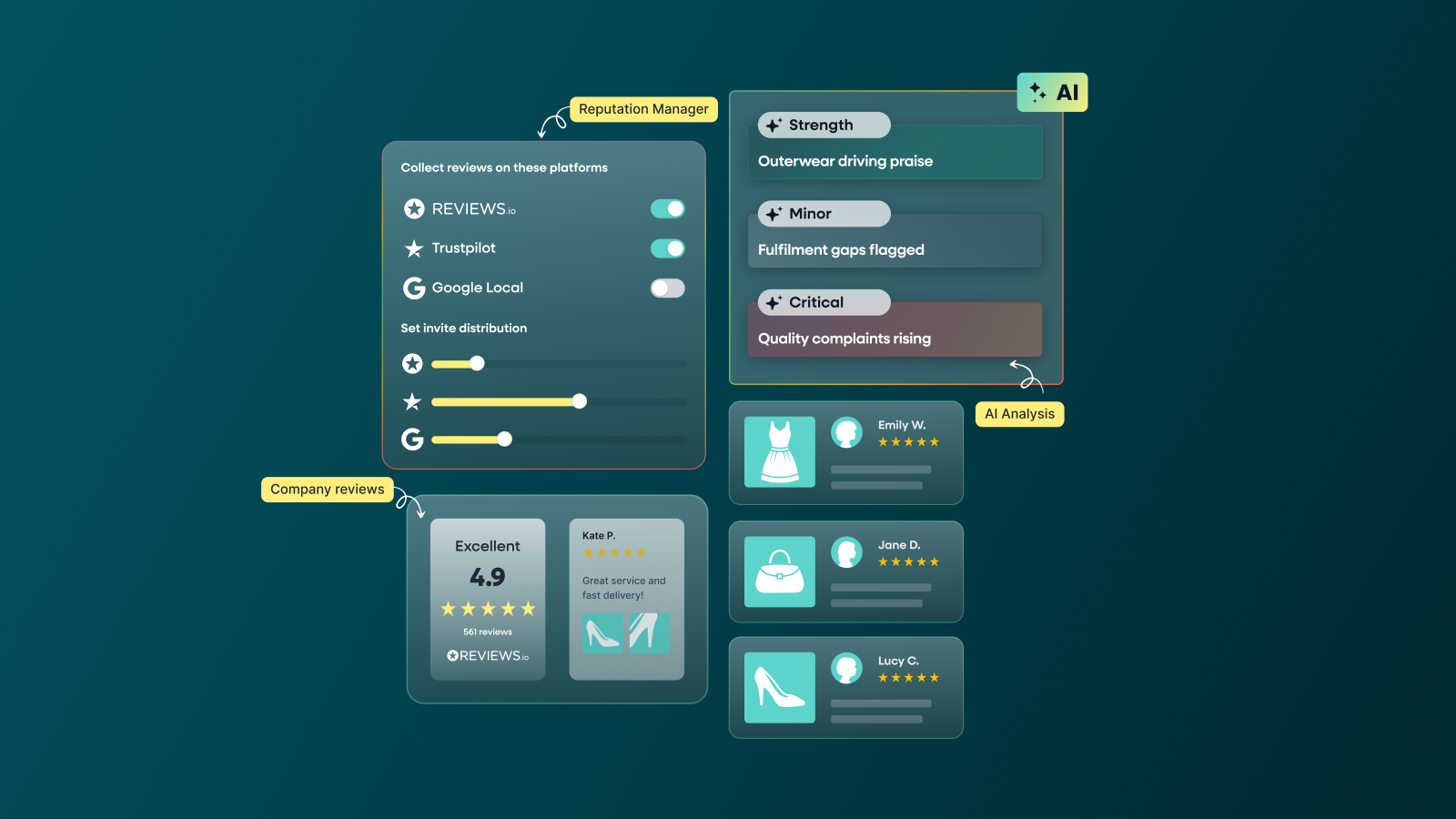
A more flexible approach, REVIEWS.io’s Reputation Manager lets you route company reviews across multiple public platforms - including Trustpilot. You can set a percentage split, so signals are distributed where they’re needed most. You can also monitor your third-party profile health from the REVEIWS.io dashboard. It gives you greater control over your wider reputation, and greater visibility on a wider range of platforms.
Rank #3: Okendo
Okendo can request Trustpilot and Google Business Profile reviews through its Events feature and Klaviyo flows. It works, but the setup is more manual than REVIEWS.io's native routing.
Rank #4: Yotpo and Stamped.io
The two platforms are comparable here. Both allow for company review collection - so you can manage brand reputation on your own site - but you can’t route company reviews to other profiles. If you want Trustpilot to influence how your brand appears in AI search, you’ll need to manage that profile separately.
Rank #1: REVIEWS.io
The strongest fit for spotting return risk early. REVIEWS.io’s Smart Analytics surfaces issues as clear, prioritised findings, with labels like critical, strength or minor, plus key takeaways on what the pattern means. That makes it easy to see whether quality complaints, fulfilment gaps or product-specific issues are likely to affect returns and trust. It’s less about raw data, and more about knowing what needs attention.
Rank #2: Yotpo
A strong option for review analysis. Yotpo Insights identifies key topics and sentiment in review content, with filters by product, date and rating. That makes it useful for spotting product issues over time, especially if you want to understand how customer feedback connects to product strategy or conversion.
Rank #3: Stamped.io
StampedIQ gives merchants sentiment and topic analysis, including detailed breakdowns by topic, related themes, trends over time and the products linked to each issue. It’s useful for tracking product-level complaints, although it feels more like analysis than prioritised action.
Rank #4: Okendo
Okendo Reviews Keywords automatically generates intelligent tags from product reviews and groups them into keyword topics. It’s helpful for seeing common product themes, but less developed as a return-risk dashboard. You can find the topics, but it does less to tell you which issues matter most.
Rank #5: Trustpilot
Trustpilot Review Insights is useful for spotting company-level reputation themes, such as delivery, service, refunds or policy complaints. But it’s less suited to product-level return analysis, which is where many return risks start. For this specific job, it’s more reputation monitoring than product intelligence.
Rank #1: Okendo and REVIEWS.io
Both are strong choices for review-to-support workflows.
Okendo is particularly good at turning review issues into support tickets. Low-rating or negative-sentiment reviews can automatically create Gorgias tickets, giving agents a clear route to follow up when feedback needs attention.
REVIEWS.io is just as strong for teams using Gorgias, but the advantage is breadth. Company reviews, product reviews, third-party reviews, questions and survey responses can all move into Gorgias. Agents can reply to reviews and questions from the helpdesk, and request a review revision after resolving the issue.
Rank #2: Yotpo
A good option if support and loyalty sit together. Yotpo brings review, sentiment, loyalty and customer context into Gorgias, including loyalty points, VIP tier, past reviews and top topics. That helps agents understand the customer relationship as well as the complaint.
Rank #3: Stamped.io
Solid helpdesk coverage, especially when reviews and loyalty are connected. Stamped works with Gorgias and Zendesk, and can bring review history and customer context into support workflows. Useful, but less strong than Okendo or REVIEWS.io for structured review escalation.
Rank #4: Trustpilot
Useful if Trustpilot is where complaints appear. Trustpilot reviews can be pulled into helpdesk workflows, and agents can reply from there. But it only covers the Trustpilot part of the support picture, not your wider mix of product reviews, company reviews, Q&A and other review feedback.
Rank #1: REVIEWS.io, Yotpo and Okendo
The three platforms are comparable here. All support visual reviews, structured attributes and AI review summaries, giving shoppers more useful context without forcing them to read every review.
The main difference is Q&A. REVIEWS.io's Expert Answers is brand-controlled, so only the company responds. That helps keep advice accurate around sizing, compatibility, product use and returns policy.
Yotpo’s Q&A is more community-led, with previous customers able to answer questions as well as the brand. That can add authenticity, but gives the merchant less control. Okendo sits closer to a moderated model, where merchants can control what gets published.
Rank #2: Stamped.io
Stamped covers the core product-proof features well, including visual reviews, Q&A and display widgets. Its Q&A can be brand-led or opened up to the community. It’s a solid option, but REVIEWS.io, Yotpo and Okendo go further by making structured attributes and AI summaries a stronger part of the buying experience. That gives shoppers faster, more specific answers before they purchase.
Rank #3: Trustpilot
Trustpilot supports product reviews, but they’re an add-on rather than the core product. Ratings, attributes and photo reviews can all be collected and displayed, but Trustpilot’s main strength is still brand-level trust. For reducing buying uncertainty on PDPs, it is less naturally ecommerce-led than REVIEWS.io, Yotpo or Okendo.
Before choosing a platform, check how pricing and packaging work with your return flow.
Return-heavy brands may delay review requests while refunds, exchanges or support issues are unresolved, so order-based billing can matter. Stamped, for example, counts orders toward monthly limits even when review requests are not sent.
Add-ons matter too. Trustpilot product reviews are an add-on, so costs can rise if you need both public reputation and product-level proof.
REVIEWS.io, Yotpo and Okendo scale in different directions: REVIEWS.io for reputation management, Yotpo for retention, and Okendo for Shopify customer marketing.
Looking at the rankings, REVIEWS.io is the best all-round fit.
The biggest advantage is review distribution. Instead of building reputation in one place, REVIEWS.io lets you route company reviews to the public profiles that matter most, including Trustpilot.
That gives return-heavy brands more control over where trust signals appear, while still supporting the product proof, AI analysis and support workflows needed to manage reputation day to day.
That makes REVIEWS.io the strongest choice when online credibility, brand visibility and the wider returns experience all need to be managed together.
Use Trustpilot if your main goal is public brand reputation. Use a Shopify review app if you need product reviews, UGC, and on-site conversion tools. REVIEWS.io lets you do both by managing Shopify reviews while also routing company reviews to Trustpilot.
AI tools read signals from multiple places, so it helps to build healthy profiles across more than one platform. Your own site, Trustpilot and other public profiles should all be part of your reputation strategy.
Yes. Product reviews help shoppers understand fit, quality, sizing and real customer experience before they buy, which can reduce avoidable returns. Review attributes and AI summaries are particularly helpful here.
REVIEWS.io is the strongest fit with Rich Returns. Both sit in the clearer.io ecosystem, helping merchants manage the return experience and the reputation signals around it.


